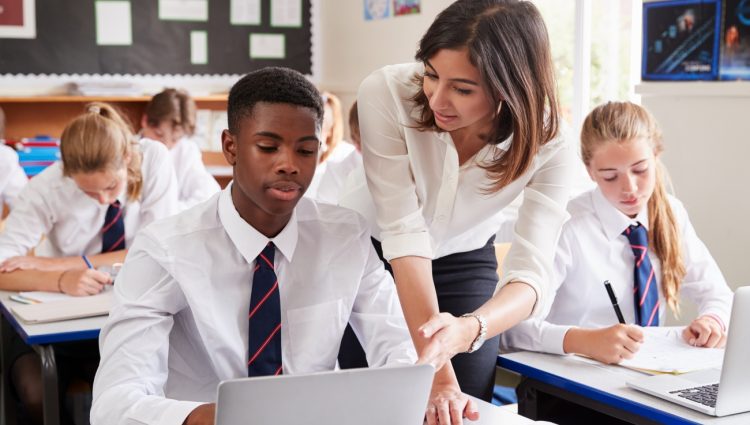
A Guide to Professionals
Find out more about the specialist professionals that can support blind and partially sighted students and what services local authorities can provide.
Find out more about 'A Guide to Professionals'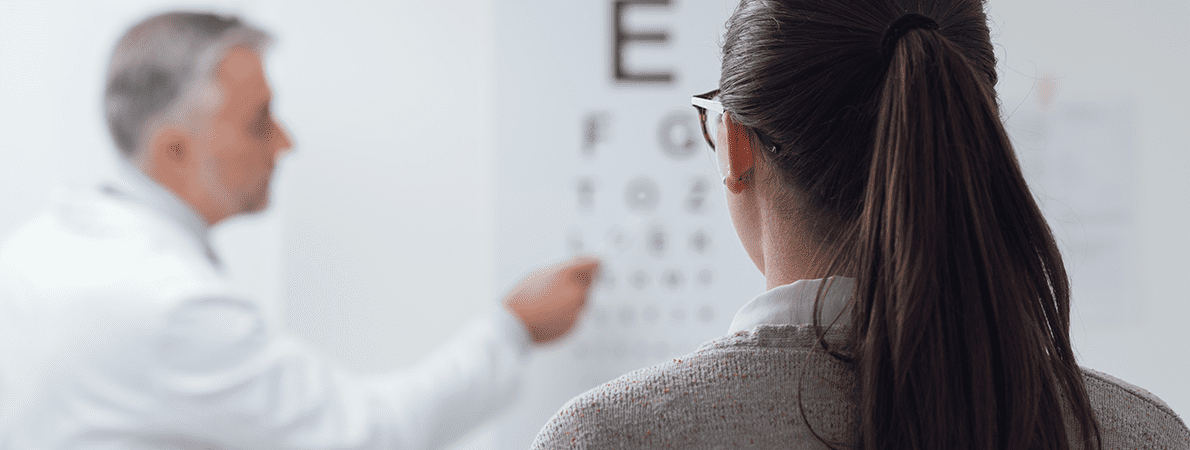
Vision impairment means a child or young person’s (CYP) eyesight cannot be corrected to a ‘normal’ level using contact lenses or glasses.
A severe vision impairment is defined as a visual acuity of less than 6/60 and 3/60. This means what a CYP with ‘normal’ vision can see from 60 metres, a CYP with a vision impairment would need to be between 3 and 6 metres away to see in the same level of detail.
A moderate vision impairment is defined as a visual acuity of less than 6/60 to 6/18. This means what a CYP with ‘normal’ vision can see from between 18 metres to 60 metres, a CYP with a vision impairment would need to be 6 metres away to see in the same level of detail.
There are an estimated 34,500 blind and partially sighted (BPS) children and young people aged 0-25 in England. This is only 2-3% of the total estimated Special Education Needs and Disabilities (SEND) population which makes it a low incidence disability.
As it is a low incidence disability you may not have supported many BPS students and might not know what the right support looks like. No one expects career advisers, teachers or other professionals to be an expert in knowing what support a BPS student may need, that is why we are here to help you.
To help you understand how many BPS CYP there are in England and your local area, please read the Key facts about vision impairment in children and young people resource.
RNIB has produced a Sight Loss Data tool which provides local data on the number of blind and partially sighted people across every local authority.
RNIB’s Knowledge and Research hub is a place where you can find key statistics relating to blind and partially sighted people. In particular, their What do we know about education resource has detailed statistics about blind and partially sighted students in education. This report summarises the key things that are known about the education, wellbeing and broader development of children and young people with a visual impairment.
Gov UK’s Special educational needs in England report details the statistics around SEND students. Although not specifically about blind and partially sighted students, it does give up to date information about the number of students with Education Health and Care Plans (EHCPs) plans and does include reports about students with visual impairments further on.
National Sensory Impairment Partnership’s (NatSIP) Key facts about vision impairment in children and young people research paper provides several statistics around blind and partially sighted people in education.
There is a huge amount of data out there which can be used to understand the experiences of blind and partially sighted students in education. Our Safe Stats report (2024) is an open resource which brings together a snapshot of the available data in one place. Find out more by heading to our webpage here.
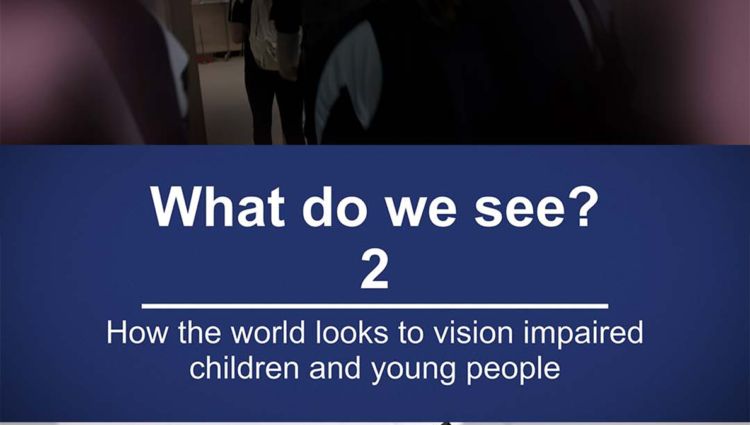
For an understanding of what children and young people with different sight conditions might see, watch our brilliant What Do We See? 2 – How the World Looks to Vision Impaired Children and Young People video! Or if you would like to learn more about supporting blind and partially sighted students, why not check out our new online training offer?
For more information about supporting students with sight loss, why not check out our understanding vision impairment and deafblindness resource, which is a sequel to this page. Or you can read our Student Stories, where blind and partially sighted students share their experiences of education.
Find out more about the specialist professionals that can support blind and partially sighted students and what services local authorities can provide.
Find out more about 'A Guide to Professionals'Explore our Safe Stats report with its comprehensive overview of data on blind and partially sighted students in education.
Find out more about 'Safe Stats: Data on Blind and Partially Sighted Students in Education'Find out about our Education Information Advice and Guidance Service, and how it can support blind and partially sighted students to get the most out of their education.
Find out more about 'Education Information Advice and Guidance Service'Explore our video which simulates and provides information on five of the most common conditions affecting vision impaired children and young people in the UK today.
Find out more about 'What Do We See? 2 – How the World Looks to Vision Impaired Children and Young People'
This online community is for blind and partially sighted students, family and friends, education providers and other staff in the sector. It forms a supportive environment where relevant news, advice, questions and pieces of work can be shared to enable students with visual impairments to get the most out of their time at university.
Join our Facebook group