Written by Khansa Maria, Student Voices Volunteer
When we think about preparing children and young people with vision impairment for the future, our minds often go straight to education, exams, or getting a good job. Of course, these things are hugely important. But there’s another side to success that we sometimes forget: the everyday skills that allow us to live our lives independently.
Independent living skills are at the heart of Area 6 of the CFVI. These are the little (but actually very big) things like being able to cook for yourself, keep on top of your laundry, manage your money, travel safely to the library, pop to the supermarket, or even head out to the cinema with friends. They’re the building blocks of a life lived confidently, without having to rely on others for the basics.
And here’s the thing: it’s not just about convenience. Independence touches on dignity, choice, and empowerment. If you can do something yourself, you don’t have to wait for others to fit it into their schedule, or accept it being done in a way that doesn’t really work for you. There’s a kind of self-fulfilment in choosing how you want your life to run; whether that’s how you fold your clothes, cook your dinner, or plan your social life. It’s also about balance in relationships – avoiding unnecessary dependence, and the power dynamics that sometimes come with it.
This is why habilitation – the process of learning and developing these skills – matters so much. For children and young people with vision impairment, it’s about making sure they have the opportunity to gain these life skills early, so that adulthood doesn’t come as a shock. By embedding independence into their education and experiences, we give young people the freedom to live their lives on their own terms.
And that’s why the CFVI exists. Built on extensive research and lived experience, the framework bridges the gap between what we imagine success to be – like exam grades and employment – and what success really feels like – being able to thrive day-to-day and having the confidence to step into adulthood with independence and self-belief.
So, when we talk about education and opportunity for children and young people with vision impairment, let’s remember that it’s not only about the classroom. It’s also about the kitchen, the bus stop, the high street, and everywhere life takes us. Independent living is what makes a vision for all possible.
My Journey to Independence
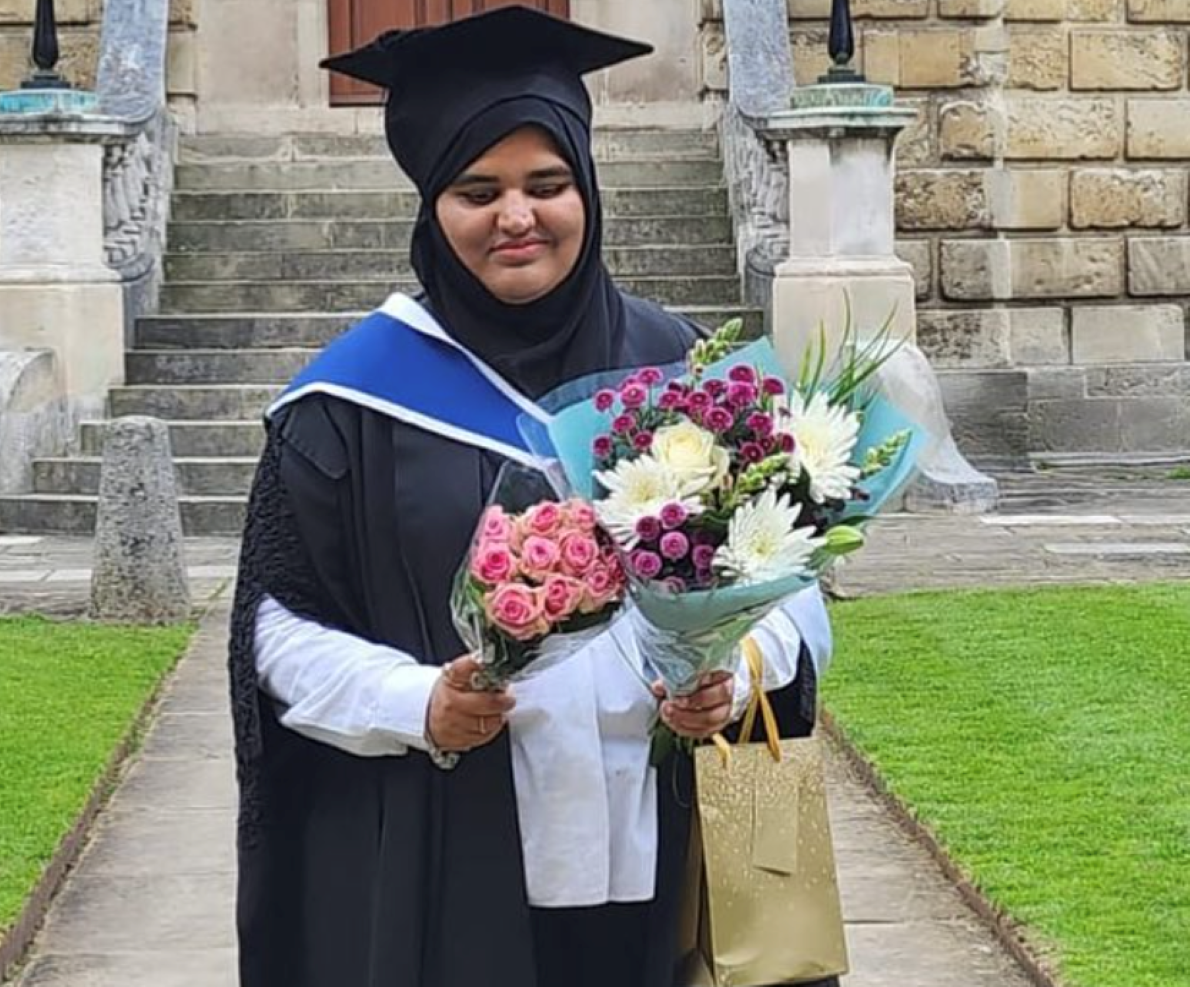
When I first moved to Oxford, there was so much more to figure out than just starting my master’s or PhD – honestly, the academic part was the easiest bit! Settling into a new country and city as someone with vision impairment meant learning countless small things that most people don’t think twice about – from figuring out how to use my touchscreen washing machine to working out how to cross busy roads safely.
I had around four or five hours of formal mobility training, but a lot of what I learned came through community support – asking other blind and partially sighted people how they did things, finding tips online, and using technology such as Be My Eyes and Voice Vista. Those tools, and the advice from others, helped me build confidence one small step at a time.
There are moments when independence really sinks in, sometimes in big ways, like submitting a thesis on my own, and sometimes in small, everyday victories, like getting to class on time or cooking a meal I actually want to eat.
Meal prep became a lifesaver: I always keep something cooked and frozen to reheat on busy days. It’s simple, but it keeps life running smoothly. Money management was a learning curve too. When I first lived alone at 18, I went on a chocolate-buying spree just because I could, I didn’t even eat most of it! I ended up giving it away! That experience taught me that independence isn’t about doing everything just because you can, It’s about making choices that actually work for you.
I rely on a mix of practical tools and community knowledge, asking people, using Google Maps, watching YouTubers share their tips. There’s always something to learn if you stay curious and open.
If I could tell a new student who’s blind or partially sighted one thing, it would be this: you’ve got this. Keep exploring, don’t give up, and don’t be afraid to laugh off the funny mistakes, they’re part of the process. Reach out to your community, even if it’s through an anonymous Facebook post. There’s a huge amount of support out there, and every question you ask is another step toward confidence and independence.
Want to Know More?