
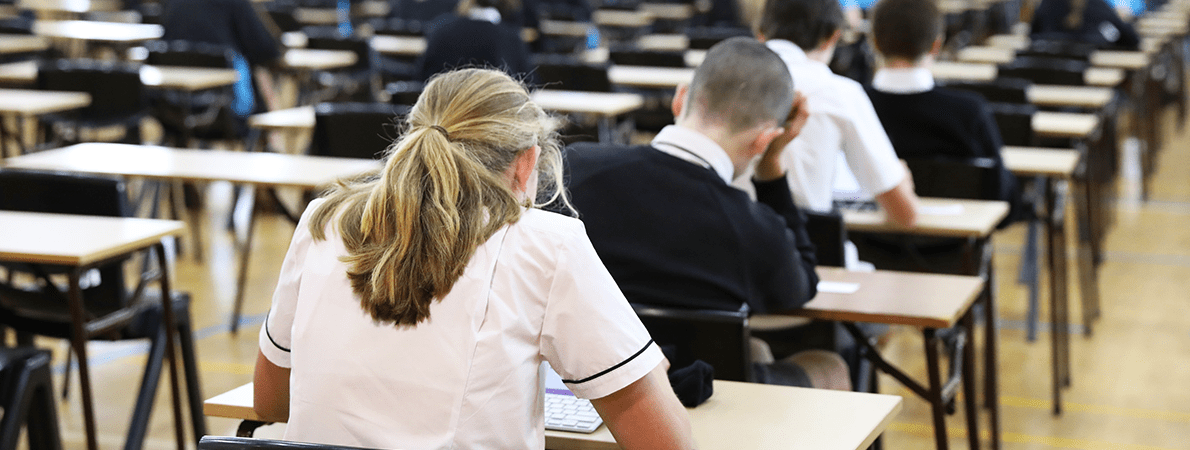

Ensuring Equal Access to Public Examinations for Candidates with Sensory Impairment

This guide produced by the National Sensory Impairment Partnership (NatSIP) is to help teachers of children and young people with hearing impairment (HI), vision impairment (VI) and multi-sensory impairment (MSI) to understand the key principles underpinning reasonable adjustments for public exams and access arrangements for candidates with sensory impairment. This includes for students with visual impairments, to ensure they can access their exams and assessments the same as their sighted peers.

It covers:

  • Reasonable adjustments.
  • Choosing courses with care.
  • Access arrangements for students with a visual impairment; including modified papers, extra time, electronic papers, rest breaks and using technology.
  • Information on the professionals who can support exams, such as readers and scribes.
  • Exemptions.
  • Deadlines for requesting access arrangements.
  • Key principles.
  • Normal ways of working.
  • Case studies of disabled students with examples.
  • Special considerations.
  • Technology.
  • Definitions of disability.

Read the guidance

Or to learn more about the types of support that are available to blind and partially sighted students during exams and assessments, including details on reasonable adjustments, why not check out our helpful guide?


You may also be interested in...

What Support is Available in Exams for Blind and Partially Sighted Students?

Information for parents on what access arrangements are available for year 6 SATS and GCSEs for blind and partially sighted students.

Find out more about 'What Support is Available in Exams for Blind and Partially Sighted Students?'



Preparing for Exams and Assessments

Explore our series of top tips to ensure you receive the right support and arrangements for your exams and assessments as a blind or partially sighted student.

Find out more about 'Preparing for Exams and Assessments'

Professionals

Discover a range of resources, guidance and training for professionals working with blind and partially sighted students in secondary, further and higher education.

Find out more about 'Professionals'
Back to top