
Support for International University Students
Find out what support is available for blind and partially sighted international students studying at university in the UK.
Find out more about 'Support for International University Students'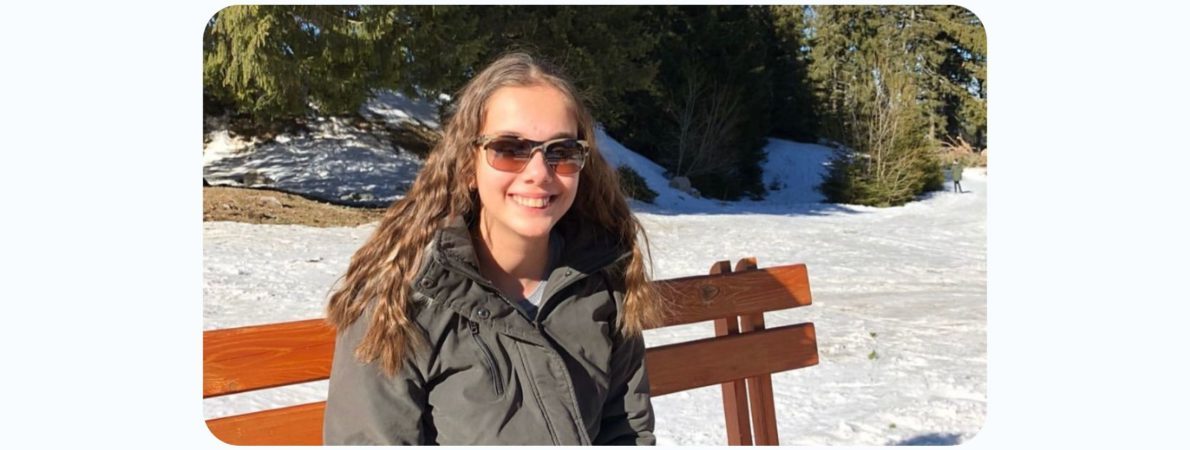
“Moving to a new country is a huge experience. You overcome your barriers, you get out of your comfort zone, and that makes you a new person.
“Even if you don’t like it, or it wasn’t the right thing for you, you still have had an amazing experience that taught you something. You always gain something.”
Zehra moved from Turkey to the UK three years ago. She shares her journey as an international student in a foreign country. Zehra lives in Brighton and is studying for her A-Levels in college. She has retinopathy of prematurity and was born blind. She explains why she made the move to the UK with her mum.
“The main reason was that there is more support and opportunities in education and employment for disabled people in the UK. I wanted to chase my dream! In Turkey, I was going to a mainstream school and it was not easy to find other visually impaired (VI) people like me. And it wasn’t just the school, there is a lack of support for disabled people. Many people in Turkey still have taboos about people with special needs. People’s perceptions of disabilities are different to here.”
“Here you have so many different organisations for blind and partially sighted people, sports clubs, and activities specifically designed for us.
“And this support, isn’t just in education, but in all areas of life. You can live more independently, there are volunteering opportunities and chances to raise your voice about your needs.
“When I started looking for colleges to decide where to go, I found that some couldn’t fully support me, for example, in terms of equipment. In the beginning, I didn’t know exactly how things work, the system here and the processes.”
“I started looking for organisations that could possibly answer some of my questions and found a team for visually impaired people in Brighton. They helped me with how I could get cane practice, find English braille courses, find a QTVI, and they helped me with my applications to colleges.
“Here I use braille more than when I was in Turkey. That’s really important for me. I have even learnt to use braille diagrams to do my maths and geometry – which we didn’t have in Tukey. Now, I am learning how to use a new braille device.
“I am the only visually impaired student in the college. They did not have previous experience with a VI student. But they do the best they can to give me all the equipment I need, which is a computer and braille display. I use a screen reader on my laptop and Voiceover on my phone. These were the main tech features I needed help with.”
“They make sure I get a special support assistant. Because of Covid I couldn’t go to college during my first year in England but when I started everything was okay.”
“I have learnt new skills, like English braille, independent living and different life skills. I have met so many and diverse people from all over the world; I even discovered tandem cycling, which I did not know before – and I really enjoy it! After completing my A-Levels, I want to go to university and become a lawyer and advocate for disabled people’s rights.”
“People can achieve so much more by getting the right support. VI people are able to self-advocate more here to address their needs.”
“Of course, there were challenges in this journey, and I still experience some. I couldn’t speak English before coming here. But having to study everything in English, and understand different accents took me some time to get used to.”
“When you go to a new country you expect to start a new life. No one can guarantee what’s going to happen. My biggest fear was ‘What if I fail?’, ‘What if I don’t find the life that I want here?’, ‘Will I manage to adapt?’
“Moving abroad at that age was a difficult decision to make. I had a life there and even if there were difficulties in that life, I was familiar with it. And I knew how things worked. I moved here with my mom, who has been a great support, both practically and mentally.”
“Now, looking back and reflecting on my decision, I am proud of the work I have achieved since I came here. I grew up and have become a different person with new skills and experiences.
“And if I could give some advice to other disabled young people with the thought of moving abroad, I would say ‘Go for it! It might work, it might not, but it is one of the most amazing experiences you can have!’
Find out what support is available for blind and partially sighted international students studying at university in the UK.
Find out more about 'Support for International University Students'Discover how technology can super-charge your education as a blind or partially sighted student. Check out our informative guides and resources to get started!
Find out more about 'Technology in Education'Read Khansa’s story of studying as an international student at Oxford University, sharing her experiences and tips for other blind or partially sighted students.
Find out more about 'Khansa’s Story: Getting the Most Out of Studying as an International Student'Explore the ways college leadership teams and staff can make colleges accessible for blind and partially sighted students, with our helpful guide.
Find out more about 'Making College Accessible'
This online community is for blind and partially sighted students, family and friends, education providers and other staff in the sector. It forms a supportive environment where relevant news, advice, questions and pieces of work can be shared to enable students with visual impairments to get the most out of their time at university.
Join our Facebook group