Sometimes it can feel difficult to get around independently as a blind or partially sighted student, especially in a new school environment. But with the right training and support these challenges can be overcome.
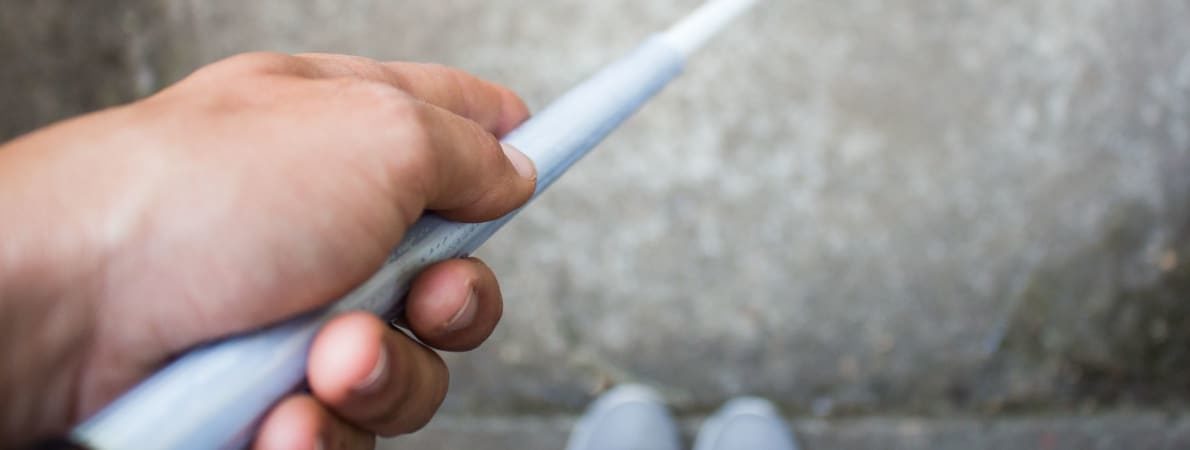
Learning how to get around by yourself when going to school can have a positive effect on your confidence and independence. That’s why it can be really handy to learn basic mobility skills before you start school. This can include things like learning how to use a long/guide cane, using buses and trains, and other independence skills.
Mobility Specialist
This is where a person called a mobility specialist or Rehabilitation Officer for the Vision Impaired (ROVI) comes in. Their job is to train you in these skills to help you become more confident at getting around independently. To find out more about their roles, check out RNIB’s Encouraging Independence guide.
It is also a great idea to learn your route to school. Before you start, you could ask a parent or carer to teach you the route and practice it with you until you have learnt it.
Know Your Way Around
It’s just as important that you know your way around the school as well. Make sure you ask someone to teach you where everything is; such as your classrooms, assembly halls, canteen, bathrooms, exits and entrances, and everywhere else you may need to go during school. You could speak to your Qualified Teacher of Children and Young People with Vision Impairment (QTVI) and mobility specialist to arrange this.
Knowing that you have the skills and confidence to get around by yourself will make you feel like you are ready for anything when those school doors open on your first day!
Technology
For any blind or partially sighted student, technology can super-charge your studies. When it comes to navigation, there are a wide range of apps, tips, tricks and tools which you can use to help you get out and about at school. To get started, why not check out our Getting Around with Tech series?
Or you can read Sofia’s story, about how the Curriculum Framework for Children and Young People with Vision Impairment (CFVI) helped her get out and about independently, for further support.